
Restoring the Legacy, Securing the Future: A Platform of Resilience and Partnership
My governance platform focuses on these three areas of strategic oversight:
- Accountability for Academic Excellence & Accreditation Policy
- Strategic Financial Oversight & Asset Policy
- Strategic Leadership: Superintendent Search & Community Renewal
I. Introduction: The Case for Resilience
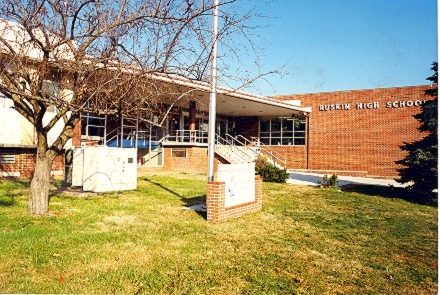
“I am a proud product of this district, a legacy built on the foundations of Ingels Elementary, Smith-Hale, and my graduation from Ruskin High School in the Class of 2000. I made the deliberate choice to turn down private schools to stay here, and this community gave me the intellectual and moral foundation to become an attorney. With the exception of college and early career positions, I have primarily lived in this district, grounding my commitment in a lifetime of shared experiences.
My journey has been one of survival. After fighting a battle against end-stage renal failure, undergoing dialysis, and receiving a kidney transplant in November 2024, I have returned to my family home in Grandview with a renewed sense of purpose.
HMC-1 is currently in a fight for its own stability—facing financial cliffs and the need for rigorous accreditation.
I am running to bring legal oversight, strict fiscal governance, and deep community partnership back to the district that made me who I am.
I am not just an alumnus; I am a survivor who knows that with the right leadership, recovery is not only possible, it is inevitable.”
II. Pillar 1: Accountability for Academic Excellence & Accreditation Policy
The Governance Mandate: Direct the administration to explore, design, and implement high-rigor academic models that align with the district’s accreditation needs and regional economic demands.
Policy Inquiry for Specialized Educational Models:
- Directing Innovation: I will champion a Board directive requiring the Superintendent to conduct a feasibility study on implementing specialized, high-rigor, K-12 academic models designed to stop “brain drain” and attract high-performing students back to the district.
- Defining Success: The Board must establish a Policy on Graduate Outcomes, mandating that future academic models must ensure a minimum level of measurable college credit or verifiable industry certification upon graduation.
- Accreditation Oversight: The Board should institute a formal, quarterly Accreditation Progress Review agenda item, demanding transparent, data-driven reporting from the Superintendent on all DESE performance indicators. This shifts the Board’s role from reactive to proactive accountability.
Directing Inquiry for Career and Technical Education (CTE):
- I will work with the rest of the board to initiate a policy that requires the administration to develop plans for industry-standard vocational pathways. This is not about specific machines, but about mandating the integration of current industry needs (e.g., robotics, advanced manufacturing, healthcare) into our future educational strategy.
- Workforce Alignment Policy: The Board must formalize its partnership with regional workforce agencies and strategic partners, like the South KC Alliance, to ensure the curriculum planning is driven by high-wage, high-demand local job needs.
III. Pillar 2: Strategic Financial Oversight & Asset Policy
The Governance Mandate: Implement robust financial policies to stabilize the district’s reserves, prevent state financial intervention, and strategically manage all physical assets to generate revenue, not liability.
Formalizing Fiscal Discipline:
- Fund Reserve Policy: The Board must adopt a formal Unreserved Fund Balance Policy that mandates a specific minimum liquidity buffer (e.g., 12.5% of operating expenses). I will ensure the Board implements a mandatory Quarterly Cash Flow Forecasting Model (CFFM) to enforce this policy and ensure transparency to rating agencies.
- Expenditure Policy Review: I will champion a full Board review of all non-instructional spending (e.g., consulting, software licensing) against a strict Return-On-Investment (ROI) Policy. Funds must be directed towards student-facing services and infrastructure.
Real Estate Asset Strategy and Governance:
- The Board must establish a formal Surplus Real Estate Management Policy. This policy will direct the administration on how to handle vacant facilities to prevent neighborhood blight and create a sustainable revenue stream.
- Future Capacity Protection: The policy must mandate that any long-term use of surplus property must include a “Right-of-Reversion” or “Reclaim Clause,” preserving the district’s legal ability to terminate the use and reclaim the facility after a fixed term should enrollment growth require it. This is sound, forward-thinking legal governance.
IV. Pillar 3: Strategic Leadership: Superintendent Search & Community Renewal
The Governance Mandate: Lead a rigorous, transparent search for a new Superintendent or retention of the current Superintendent and proactively utilize the Board’s position to formalize partnerships that provide external support and resources to HMC-1 students and families.
Formalizing Community Renewal and Partnership Policy:
- The Board must move beyond passive participation to a policy of Active Partnership Cultivation. I will champion a policy that formalizes the engagement of parents, students, neighborhood leaders, and external organizations in the strategic planning process.
- Local Partnerships: I will immediately focus on renewing and formalizing relationships with key stakeholders:
- Local Organizations: Partnering with local organizations to establish Community Resource Hubs within school facilities, providing weekend food security and family navigation services.
- Businesses & Non-Profits: Formalizing workforce pipeline commitments with community parterns like the Grandview Chamber of Commerce and non-profits like Big Brothers Big Sisters of Kansas City to provide dedicated mentorship and internship opportunities tied directly to our educational pathways.
- HOAs and Neighborhood Associations: Establishing a quarterly Neighborhood Governance Roundtable where groups can provide direct, policy-shaping input on safety, facility use, and neighborhood-specific student needs.
V. Pillar 4: Talent Realignment Policy
The Governance Mandate: Develop policy to guide the administration in restructuring the workforce efficiently while protecting institutional knowledge and investing in current staff to meet future needs.
- Policy on Staff Restructuring: Instead of mass layoffs, the Board must direct the Superintendent to implement a Talent Realignment Strategy that prioritizes internal recruitment and retraining for new, specialized roles before external hiring occurs.
- Professional Development Investment: I will advocate for a policy that dedicates a portion of operational savings toward a Targeted Professional Development Reinvestment Program, funding current staff to obtain certifications needed for future academic models (e.g., Gifted/Talented or specific CTE credentials).
VI. Pillar 5: Governance & Generational Stewardship
The Governance Mandate: Ensure long-term stability and succession planning for the Board itself, providing continuous, ethical oversight.
- Governance Code: The Board must adopt a rigorous Code of Conduct and Ethical Governance Policy to ensure all Board decisions are transparent and focused solely on student welfare.
- Board Succession Planning: I view my service as a targeted intervention. I will work to establish a Board Governance Fellowship to actively mentor and sponsor community members—especially young professionals and recent alumni—to understand complex district finances and policy, ensuring a continuous pipeline of informed future Board candidates.
📅 Action Plan: The First 100 Days (Prioritization)
My initial actions will focus on listening, legal compliance, and establishing the policy framework for recovery.
- Launch Comprehensive Listening Tour and Stakeholder Audit: Initiate the Community Governance Roundtable meetings, focusing first on parents, students, and neighborhood leaders. Simultaneously, launch a formal Partnership Audit to catalog all current external relationships and identify gaps for the Community Renewal Policy.
- Mandate Financial Stabilization Policy: Direct the administration to draft the proposed Unreserved Fund Balance Policy and present the initial Quarterly Cash Flow Forecasting Model (CFFM) to the Board for immediate adoption.
- Direct Academic Innovation Inquiry: Champion a Board directive to the Superintendent requiring the submission of a preliminary Feasibility Study for specialized K-12 academic models and high-demand CTE pathways, including regulatory hurdles (e.g., DESE waivers).
“I am not running to manage a decline; I am running to partner with you in engineering a renaissance. The Board’s role is to provide the legal framework, the fiscal discipline, and the strategic vision for the next era of Hickman Mills. Together, we can restore the legacy.”
— Matthew E. Williams, Esq.

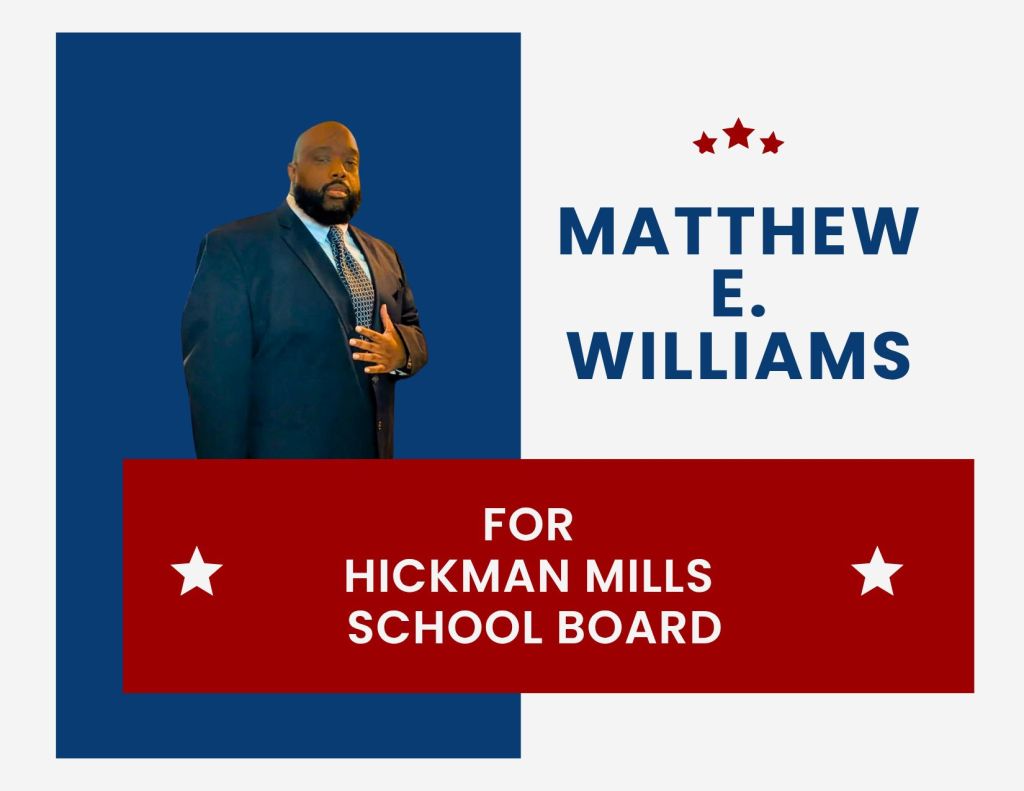
 Matthew Williams for Hickman Mills School Board